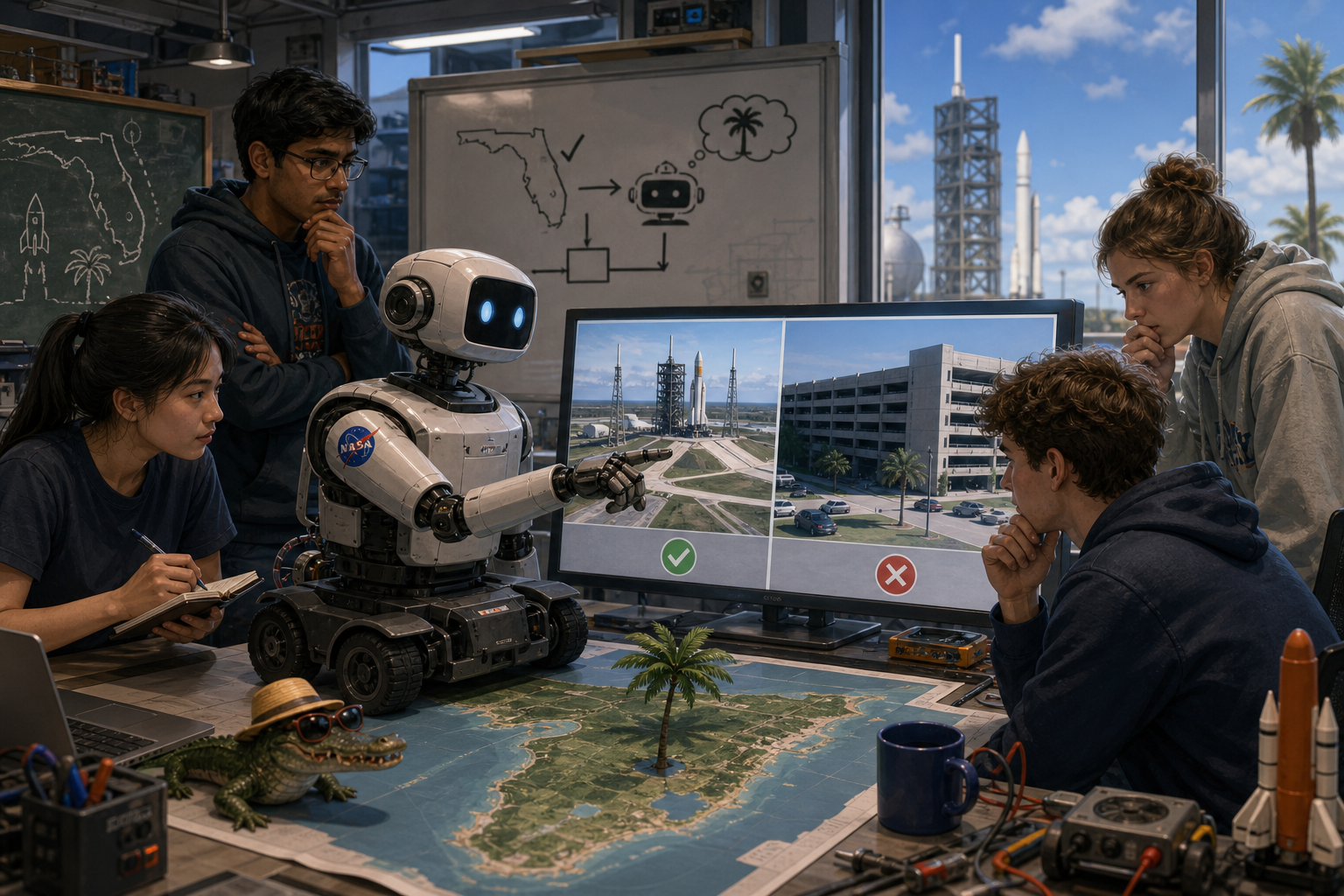
Students are set to travel to Florida for a NASA robotics competition, where they will compete alongside university teams from Australia, India and the United States. Preparations have reportedly entered their final operational phase: ensuring the robot understands that Florida is a destination rather than an instruction to become more humid.
The team’s pre-departure checklist is said to include batteries, tools, contingency parts and a laminated card explaining that a launch facility is not necessarily the correct place to park. Officials familiar with the entirely ordinary demands of intercontinental robotics have also provisionally approved a second card, for use if the machine begins requesting clearance from air traffic control.
Competition organisers are understood to welcome the international field, which will bring together machines built under several distinct academic traditions: careful engineering, ambitious engineering and engineering that has been left alone with a spreadsheet for too long. The robots will then be asked to perform tasks sufficiently precise to justify several people standing very still and saying, “It’s thinking.”
By the time the students arrive, the robot is expected to have completed a final navigation test involving a map, a compass and a firm institutional reminder that it is attending a competition, not applying for a position in regional transport planning. Should it successfully identify Florida, the team may permit it one small celebratory wheel rotation before placing it in a crate marked, with cautious optimism, “This Side Up.”