Four astronauts arrived at the International Space Station on Thursday after a trip of about eight hours, described as a U.S. speed record for reaching the orbiting laboratory. The achievement briefly placed human spaceflight several administrative forms ahead of the people assigned to administer it.
Mission planners, according to the entirely predictable logic of large organizations, were understood to be confronting the consequences of an arrival occurring before the ceremonial welcome clipboard had completed its own journey through review. The clipboard was reportedly still awaiting a determination on whether “Welcome Aboard” required a hyphen, a mission patch, or a separate acknowledgment that the station is already aboard Earth.
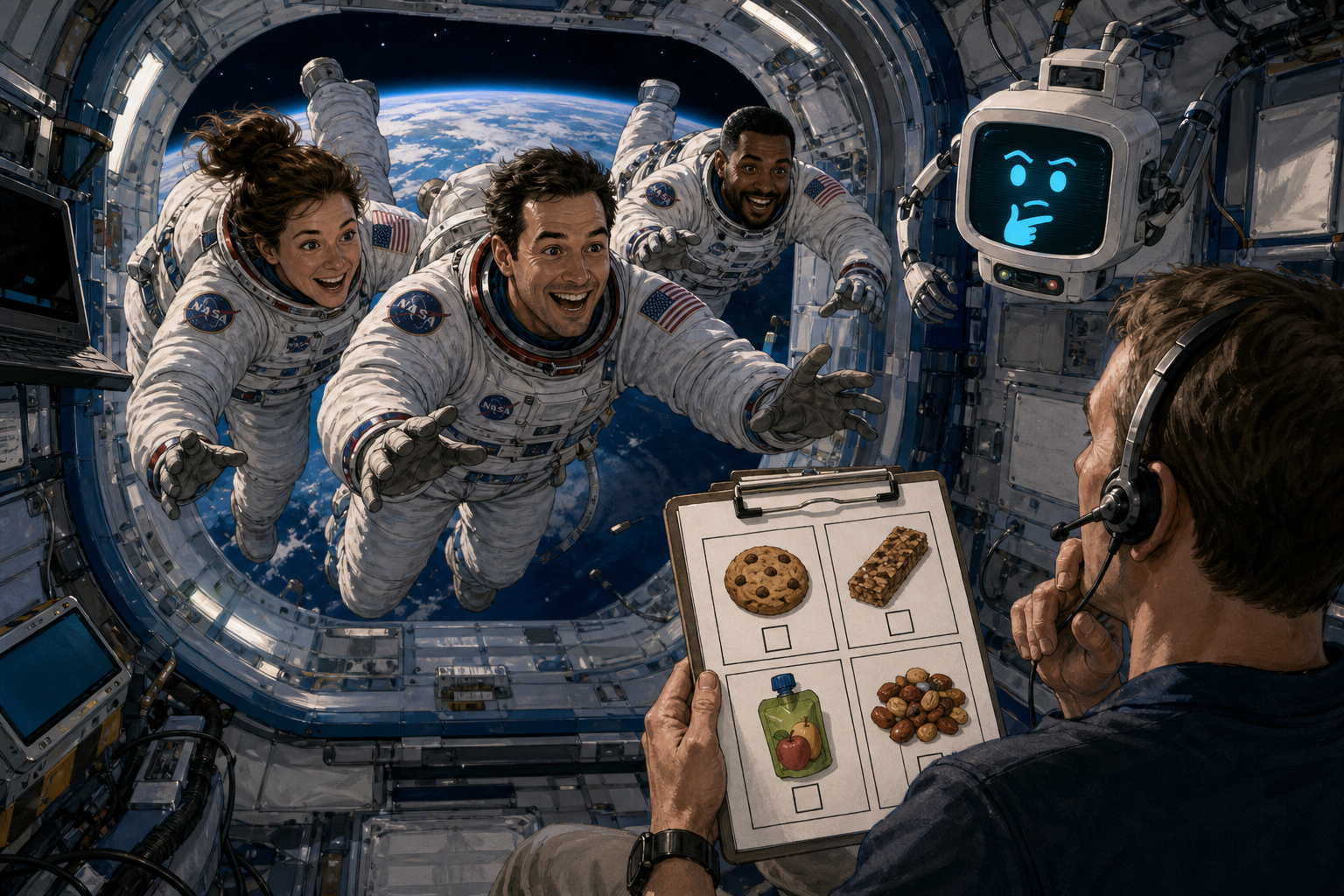
The four-person crew was said to have encountered the familiar contradiction of modern exploration: a vehicle capable of crossing into orbit with remarkable efficiency, followed by a small vestibule of procedural uncertainty. Someone had apparently prepared a snack protocol, but the protocol did not specify whether a record-setting arrival counted as breakfast, lunch, or a special occasion requiring laminated napkins.
Officials did not need to slow the spacecraft down, which was fortunate, because no one had yet located the form for doing so. Instead, the station adapted in the traditional manner: by recognizing that the astronauts had arrived, then scheduling a meeting to establish that recognition had occurred.
The rapid trip was expected to inform future missions, particularly the question of whether humanity is technologically ready to reach distant destinations before its welcome materials have been approved. For now, the crew had made history and, with it, a modest case for keeping one emergency clipboard permanently in orbit.