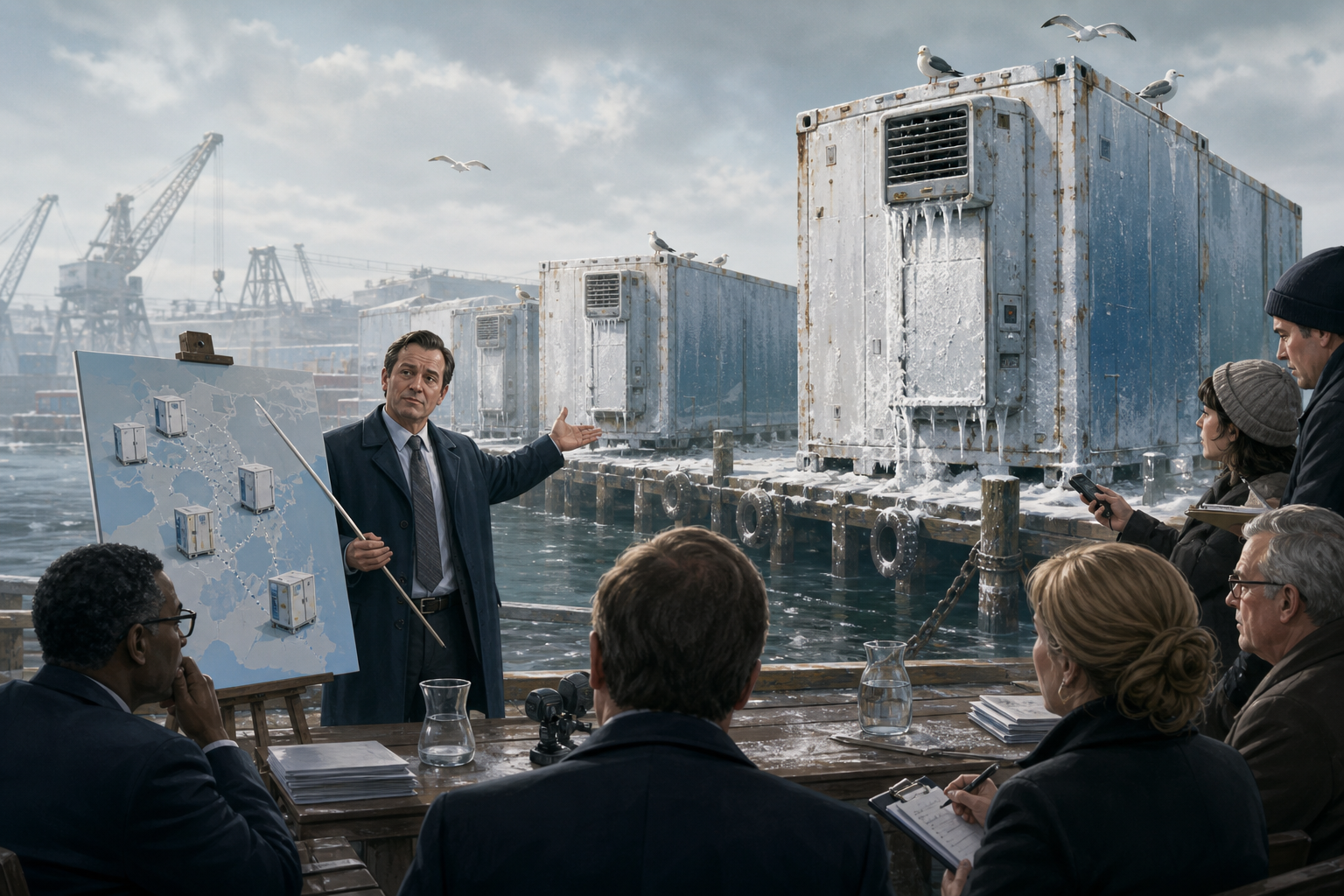
A recycling firm collapsed in 2025, leaving tens of thousands of fridge freezers at docks while household collections were suspended. The units have now entered what administrative materials describe, in no particular document, as a more contemplative phase of waste management.
Under the emerging dockside model, each appliance is understood not as an abandoned object but as a participant in a distributed refrigeration posture. It has no power, no domestic purpose and no clear onward route, but it remains reassuringly rectangular and therefore compatible with several future strategies.
The suspended household collections have also created a valuable opportunity for residents to retain appliances on site, where they can continue contributing to the national inventory of things that will be dealt with shortly. A collection date, officials have not said, would risk introducing expectations before ownership arrangements are sufficiently complete.
The pending takeover offers a route out of limbo, once all parties have agreed which party is responsible for the limbo and whether the freezers are best classified as stock, infrastructure, maritime scenery or a cautionary diagram of modern logistics. Until then, the docks will provide secure, open-air storage for a generation of appliances designed mainly to prevent exactly that.
In a closing demonstration of procedural confidence, the system is expected to continue working as designed: households will wait, freezers will wait, and the distinction between a backlog and a strategy will remain available for review.