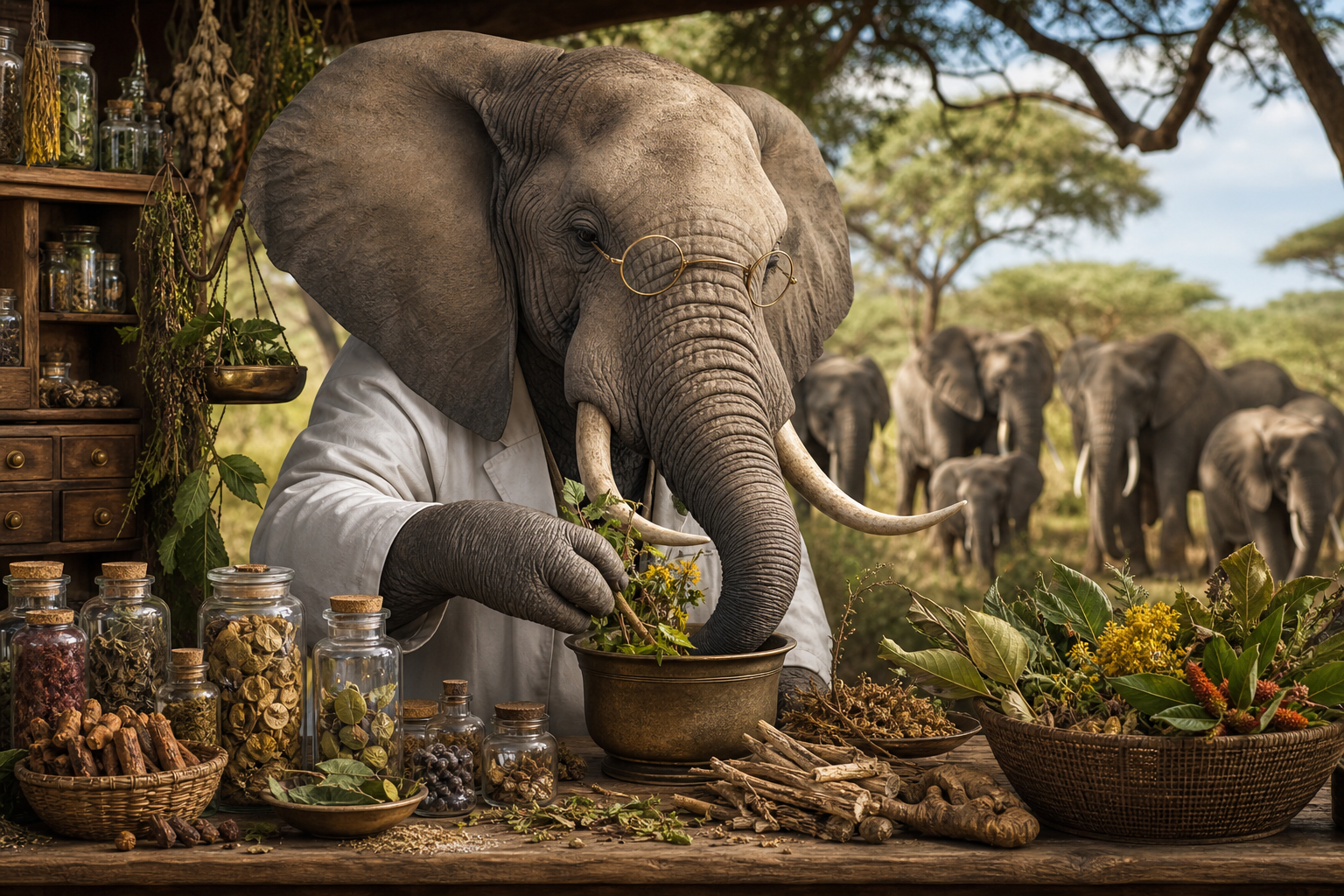
Researchers report that African elephants use dozens of medicinal plants to treat themselves and family members when sick, an arrangement that has apparently allowed the animals to avoid the principal hazards of modern care: reception desks, password resets, and the discovery that a leaf is not covered until the third quarter.
The finding suggests that the forest already operates a broad formulary, with elephants selecting remedies according to need and, crucially, without being asked whether a previous shrub had failed to achieve “clinically meaningful browsing outcomes.” No details were available on whether the plants require a referral from a senior giraffe.
Administrators were understood to be studying the model with interest, particularly its alarming lack of paperwork. In the elephant system, a patient appears to identify a useful plant, eat it, and continue being an elephant. Such an approach would present serious implementation challenges for any institution accustomed to converting a minor stomach complaint into a sequence of forms that can be misplaced independently.
The development may also complicate long-standing assumptions about expertise. An elephant, faced with illness, can reportedly locate medicinal vegetation for itself or a relative. A human, faced with the same situation, may first be instructed to download an application whose purpose is to inform them that the application is experiencing unusually high demand.
Officials have not yet confirmed whether the forest’s pharmacy will be required to introduce prior authorization. Early proposals reportedly include a 14-day review period, a narrow network of approved acacias, and a helpful notice explaining that emergency leaves are available after completing the standard leaf request form.
For now, the elephants’ system remains troublingly direct: illness, plant, recovery. Researchers are expected to monitor the situation closely until it can be made compatible with a portal.